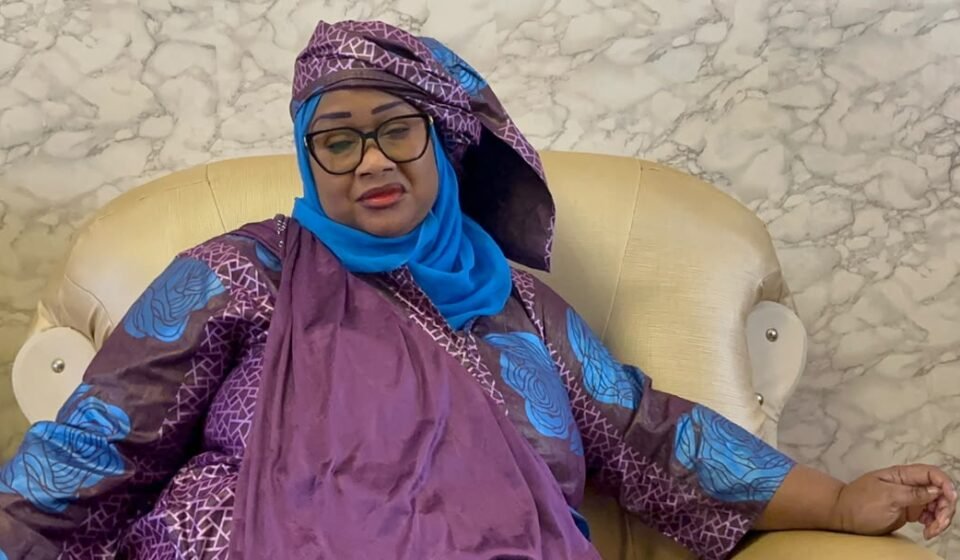

DAKAR, Senegal — When someone opens the door to her office, Anta Ndiaye believes a solution must be found, even if she has to call friends, nonprofit groups or private donors to find it.
“Whenever someone opens my office door, I hold the belief that a solution must be found,” Ndiaye said.
Ndiaye leads a division for the promotion and integration of persons with disabilities at the Ministry of Family, Social Welfare and Solidarity in Dakar. She entered social work in 2008, and the network of people she has built, from colleagues to donors, is one way she finds help when public resources fall short.
Her commitment to care began at home. She grew up the fourth of nine children. After her parents divorced, her father, a military man she calls her mentor, raised her. “We were taught strict rules of discipline… and supporting one another whenever someone is in need,” she said.
Her first memory of disability came when she was between 5 and 7 and living with her grandmother, who had a leg amputation because of diabetes. “Seeing her crawl on the ground without walking sticks deeply shocked and frightened me as a child,” Ndiaye said. What stayed with her was what followed. Her family cared for her grandmother, and that taught her that “we must always help those around us who are in need.”
When she began her training, she said, she knew the work would not be easy, because demand would always exceed what the government could provide.
At her first field placement, a center for people with physical disabilities, she saw a mother in a wheelchair caring for her crying baby. The mother, who is not identified, said through tears what she wished she could do for her child. “That heart-wrenching moment confirmed to me that social work was my true calling,” Ndiaye said. It pushed her, she said, to work to secure technical aids and support for people with disabilities.
The work changed her. She once wanted to be an actress and live what she called an artificial life. “Becoming a social worker taught me humility and transformed me as a human being,” she said.
Her office often lacks basic aids such as wheelchairs, hearing devices and walking sticks for blind people, she said. In those moments, she turns to people. “I rely on empathy, listening, and referral networks.”
Her friend Bigue Ndiaye, who has known her since they were 7 and lives in the United States, said that commitment is personal. “When government resources are lacking, Anta, who is naturally compassionate, supportive and incredible, will even pay out of her own pocket to ensure someone gets the help they need,” she said. Bigue Ndiaye said her friend carries other people’s worries deeply.
The wider system is moving too. Senegal’s 2010 social orientation law created an Equal Opportunities Card for people with disabilities. In July, a social action official said about 100,021 cards had been produced, an estimated 8.26 percent coverage, and regional units such as one in Diourbel are being set up to speed production.
What helps most, Ndiaye said, is having someone there at the right time. “Every human being has potential; they just need someone to be there at the right time so we can achieve great things together.”
For Ndiaye, the work is also a matter of faith. As a Muslim woman, she said, she knows disability can happen to anyone, including herself. She said she does not chase money or luxury. “For me, richness comes from the life experiences and good vibes of helping others.”
“Looking back at my life, I have no regrets because I made the right choice,” she said.
“Never give up, because hope is the future,” she concluded.