From fatigue to function: How a Bronx Imam built a prevention movement that changed New York policy

Twelve years ago, Sheikh Musa Drammeh could not climb two flights of stairs without stopping to catch his breath.
The Bronx community organizer visited his physician complaining of fatigue and persistent weakness. Blood work returned clean. A cardiologist found nothing abnormal. Then his doctor asked a question that would quietly redirect his life’s work — and eventually reshape public health policy across New York State.
“Do you exercise?” she asked.
He did not.
“So I came home,” Drammeh recalled in an exclusive interview with CR Journalism. “For the first time in years, I started exercising seriously, walking, jumping jacks, push-ups, sit-ups, indoor and outdoor. A month later, I returned to her. I had regained my strength.”
What followed was not a personal transformation story. It was the beginning of a systemic one.
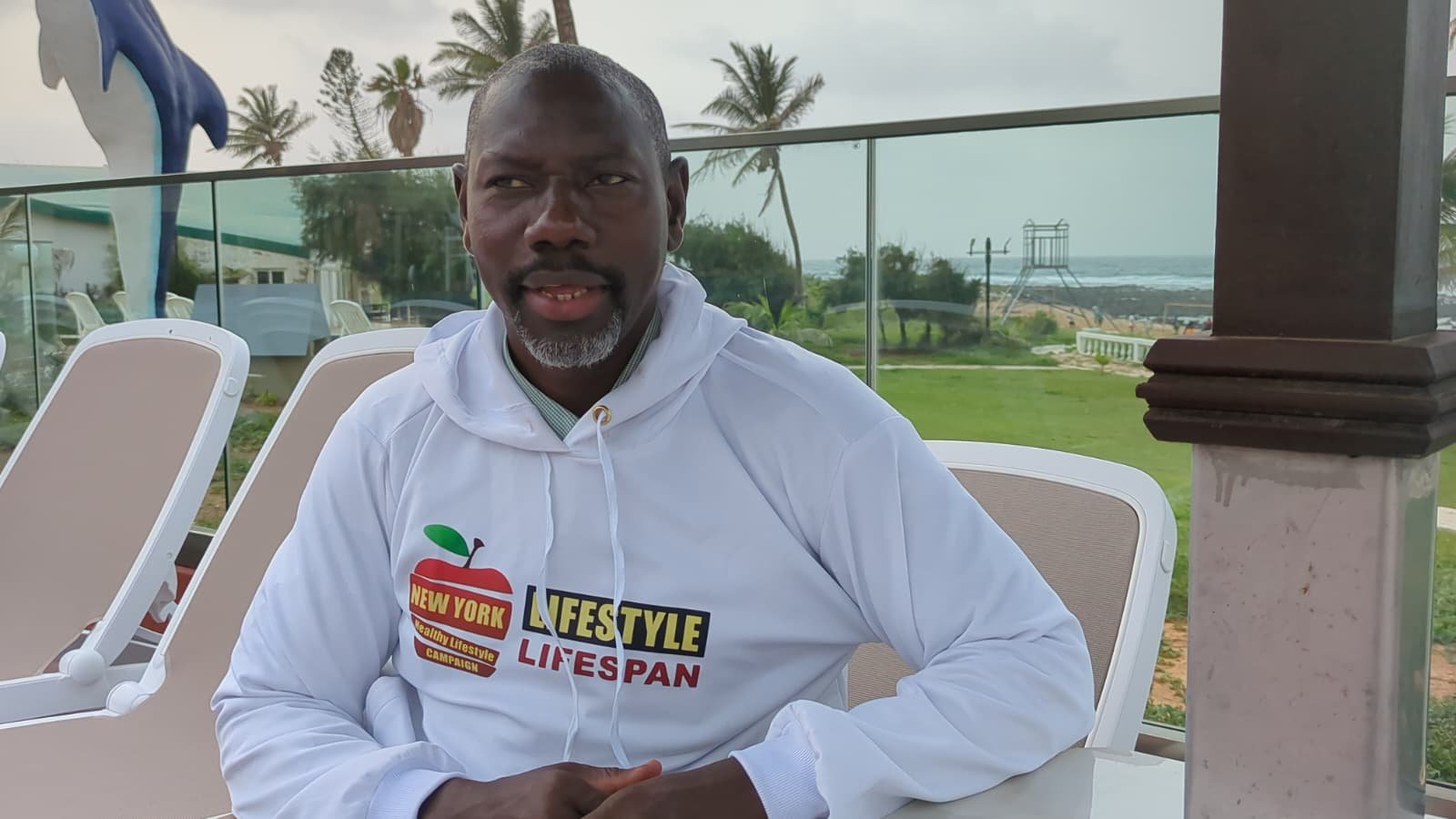
Drammeh, 64, was born in Ndrame Joka, Gambia. He immigrated to New York in 1986 and has lived in Parkchester in the Bronx for more than three decades. A Muslim cleric, interfaith leader, media publisher and community organizer, he co-founded the National Center for Health Equity — the institutional expression of a conviction he formed on the stairs of a Bronx walkup: that what ailed his neighbors was not primarily a medical problem but a preventable one, and that prevention required not a prescription pad but a community.
The results are documented. The Lifestyle Lifespan Campaign, which Drammeh initiated, directly contributed to New York State’s 2023 legislative designation of October as Healthy Lifestyle Month. In collaboration with former Mayor Eric Adams, it helped secure a plant-based menu option for patients in New York City’s public hospitals, according to NCHE’s published organizational record at nationalhealthequity.org. The campaign was formally adopted by the New York City Department of Education in the Bronx in 2020.
Yet Drammeh’s account of how the Bronx arrived at its chronic health crisis carries none of the language of inevitability.
“The Bronx has consistently ranked last in health metrics, not just in New York City, but across all 62 counties of New York State,” he said. “And yet the largest industry in the Bronx is healthcare. We have over 40 hospitals and community health centers. Every other block has a clinic or urgent care facility. And yet we are sick. Because we manage the problem. We do not cure it.”
The Robert Wood Johnson Foundation’s County Health Rankings confirm that pattern: the Bronx has ranked last among New York State’s 62 counties in health outcomes for more than a decade — a distinction that exists alongside, not despite, its density of medical infrastructure.
Drammeh’s response has been to build what the existing system does not provide: infrastructure rooted in trust, prevention and community-level accountability. For Daniel O’Connor, NCHE’s co-founder and program development officer, a biomedical entrepreneur who holds a joint M.A. and J.D. from UCLA and UC College of Law, San Francisco, that distinction is not philosophical. It is clinical.
“Sheikh Musa Drammeh has achieved something that many healthcare organizations talk a great deal about but rarely accomplish: genuine trust at the community level,” O’Connor said. “He did not build a system and expect the community to come to it. He went to the community and became part of it.”
The practical consequence of that trust, O’Connor said, runs directly into health outcomes.
“Patients who trust the people providing information are significantly more likely to participate in preventive care, follow treatment plans and communicate openly about their health concerns,” he said. “Community trust is a healthcare asset.”
Drammeh’s vision of success is not measured in organizational milestones or policy wins. It is measured in what has not yet happened, and in the refusal to accept that it cannot.
“Success is the day when a parent in the Bronx no longer has to bury a child who died from a preventable condition,” he said. “That day has not come. Until it does, the work is not done.”