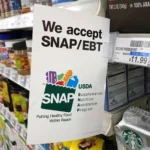
A diabetic grandmother in Parkchester now has 80 hours a month to account for, or she loses the food assistance that helps her afford insulin-friendly meals.
New federal work requirements for the Supplemental Nutrition Assistance Program took full effect in New York City on March 1, 2026, requiring roughly 123,000 residents identified as Able-Bodied Adults Without Dependents to document monthly work, training or volunteer hours to retain benefits, according to the city’s Human Resources Administration. The policy lands hardest in the Bronx, where 40% of residents already rely on SNAP and 39% report food insecurity — the highest rate of any city borough, according to a New York State Department of Health study.
New York City should therefore pursue a local health-based exemption from the rule for the Bronx, because the policy threatens to worsen chronic disease in a community already carrying the state’s heaviest health burden, without delivering the employment gains it was designed to produce.
The evidence supporting an exemption is substantial. Adults in households with very low food security are at least 40% more likely to be diagnosed with one of ten chronic conditions, including diabetes and hypertension, than adults in food-secure households, according to U.S. Department of Agriculture research compiled by the Center on Budget and Policy Priorities. The Congressional Budget Office projects the new requirements will cut national SNAP enrollment by 2.4 million people, or nearly 6%, in an average month. Aaron Richterman, an infectious disease researcher at the University of Pennsylvania’s Perelman School of Medicine, said the policy’s central justification does not hold up: “There is strong evidence that work requirements don’t achieve their stated goal of increasing labor force participation,” he said, according to the Penn Leonard Davis Institute of Health Economics. The Bronx, meanwhile, ranks last among New York’s 62 counties in overall health outcomes, according to County Health Rankings data from the Robert Wood Johnson Foundation .
The existing exemption process already exists on paper, but advocates say it functions poorly for the people it is meant to protect. Lawrence Seiler, a disability rights advocate, in an interview on a Parrot TV show called Beyond The Newsbites, said New Yorkers with chronic illnesses such as severe heart conditions, diabetes or other conditions that prevent them from working can qualify for an exemption, but only with formal medical documentation that must be kept continuously current through change reports filed with local benefits offices. Seiler said the burden of maintaining that paperwork, including correcting outdated records in city computer systems, falls entirely on the individual, even when the system itself is the source of the error.
Seiler also pushed back directly on the assumption underlying the work requirement. He said the biggest misconception about people with disabilities is the belief that they cannot or do not want to work, and argued that policy should instead expand access to meaningful employment and vocational rehabilitation for those who are able, while building a dedicated, more compassionate track within SNAP for those who are not. He said fraud prevention has a legitimate place in the program, but argued the government’s approach currently lacks the compassion the population it serves requires.
Supporters of the work requirements argue the rule encourages self-sufficiency and ensures public benefits serve those actively pursuing employment rather than long-term dependency. That argument assumes the policy increases employment. The CBO’s own projections show its primary measurable effect is enrollment loss, not job placement, a pattern Richterman’s research confirms directly and Seiler’s account of the exemption process illustrates from the inside.
New York City should extend the medical hardship exemption already written into existing SNAP regulations to cover documented chronic disease management broadly, not only cases requiring a formal disability determination, and should pair that exemption with the vocational support Seiler describes as the more durable solution. Residents seeking guidance on current exemption categories can review eligibility criteria through the New York State Office of Temporary and Disability Assistance .