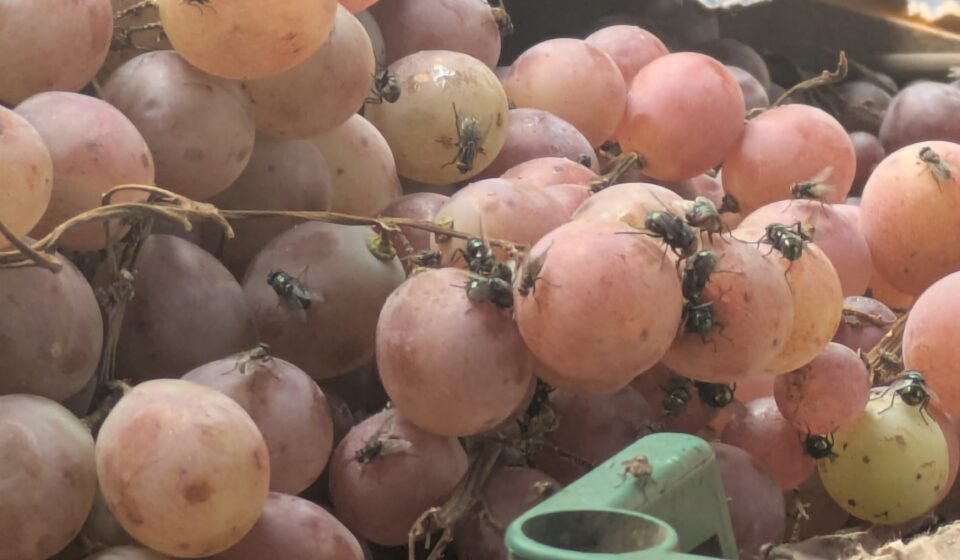

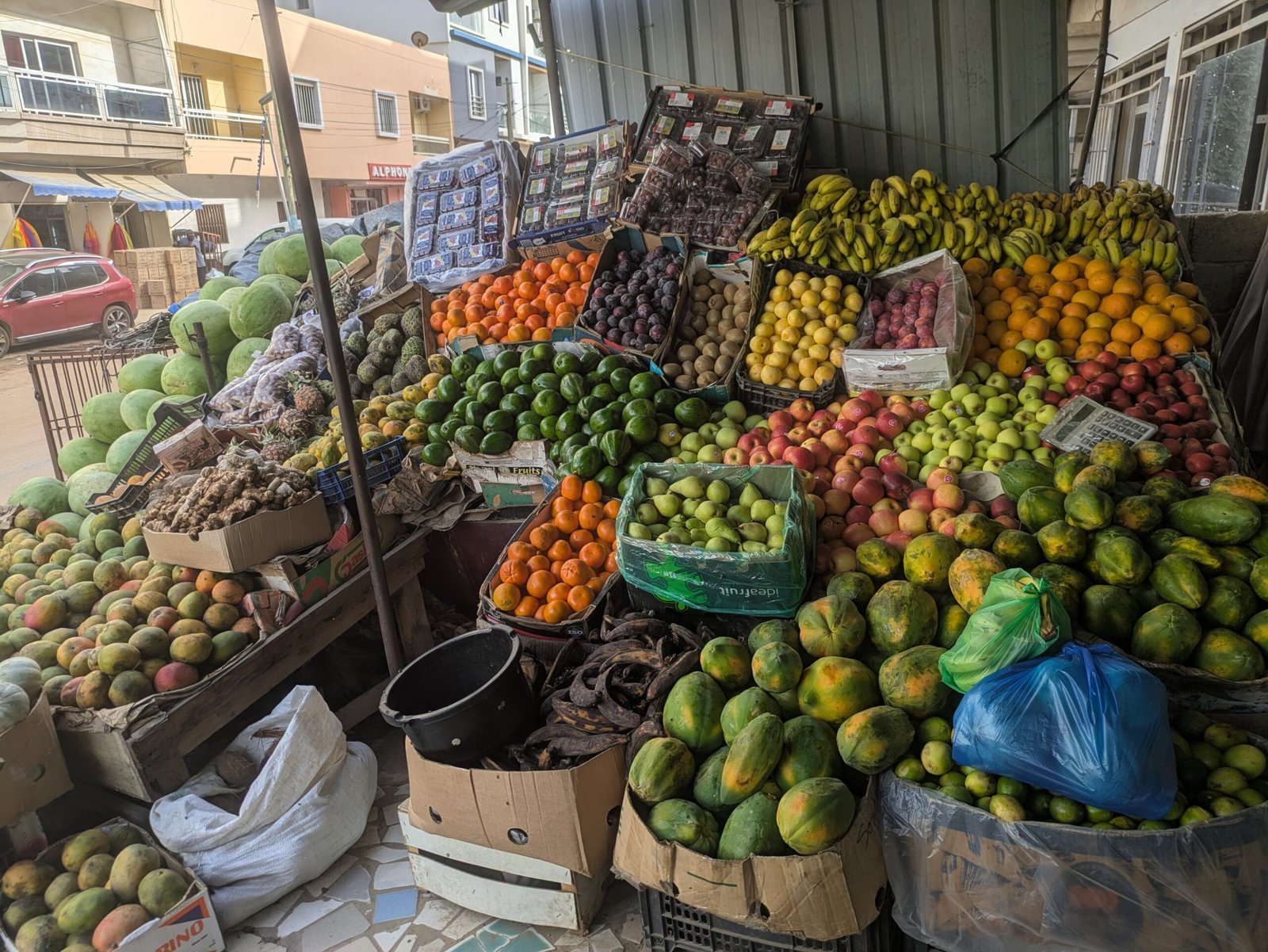
DAKAR, Senegal – Walk through one of Dakar’s open-air fruit shops before the morning traffic thickens, and you’ll find a scene that has barely changed in generations: mangoes stacked by hand, pineapples fanned out under the sun, vendors calling out to passersby just steps from motorcycles and taxis weaving past. It’s one of the most familiar images of daily life in the city, and one of its least examined health stories.
A 2024 study published in the peer-reviewed journal BMC Microbiology sampled 240 pieces of fruit and vegetables, including mango slices, from street stalls and open-air fruit shops across Dakar, and found that more than half carried E. coli, and over 60 percent carried Vibrio bacteria, both signs of contact with waste somewhere along the way from farm to hand.
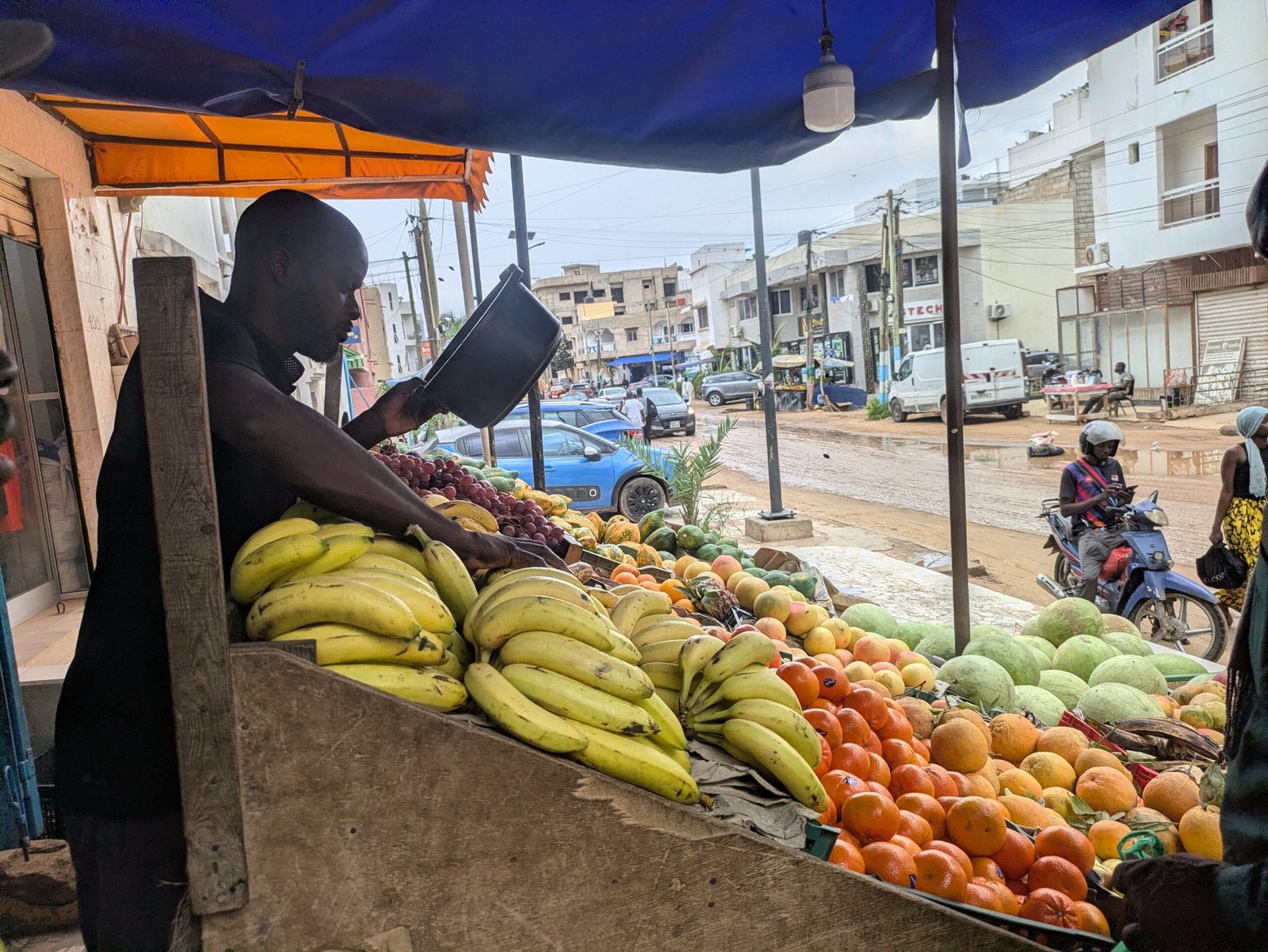
That risk isn’t constant; it swells with the seasons. Dakar’s rainy season runs roughly from July through October, and it regularly overwhelms a drainage system built for a much smaller city. A 2022 Senegalese Red Cross assessment found that flooding across Dakar, Thiès and Matam left household latrines unusable in the hardest-hit areas, raising exactly the kind of contamination risk the BMC Microbiology researchers were measuring. The Vibrio bacteria they found belong to the same genus responsible for cholera, and Senegal has experienced rainy-season cholera surges before, with health officials tracing outbreaks directly to floodwaters overwhelming the country’s sanitation systems.
The road itself adds a separate layer most shoppers never think about. Senegal’s own Ministry of Environment has found that close to half of Dakar’s fine-particulate air readings exceed World Health Organization limits, a burden tied partly to a national vehicle fleet that grows by roughly 350,000 registrations a year, much of it aging engines that have been on the road for over a decade. Separate research into roadside produce across West Africa, including along one of Ghana’s busiest highways, has found lead and other heavy metals from vehicle exhaust settling directly onto food crops grown near traffic.
The findings sit inside a larger, continent-wide pattern. The World Health Organization estimates that unsafe food causes roughly 866 million illnesses and 1.5 million deaths worldwide every year, with Africa carrying the greatest share of that burden of any region.
There’s a quieter contradiction sitting on the very same shop counters. Alongside the fresh fruit, many of these shops also stock Fanta, Coca-Cola, Sprite, 7Up, and juices carrying more added sugar than actual fruit. Researchers at Dakar’s Cheikh Anta Diop University have tied Senegal’s rising urban diabetes rates partly to exactly this shift, fruit within reach, but sugar within easier habit.
None of this is a story about neglect. Vendors selling produce this way make up a meaningful share of Dakar’s informal economy, supporting households across the city with little formal backing of their own — no subsidized refrigeration, no covered stalls, no drainage built for the water that reaches them every rainy season. What this video follows, from morning light to closing time, isn’t a failure of effort. It’s a system still waiting to catch up to the people working inside it.