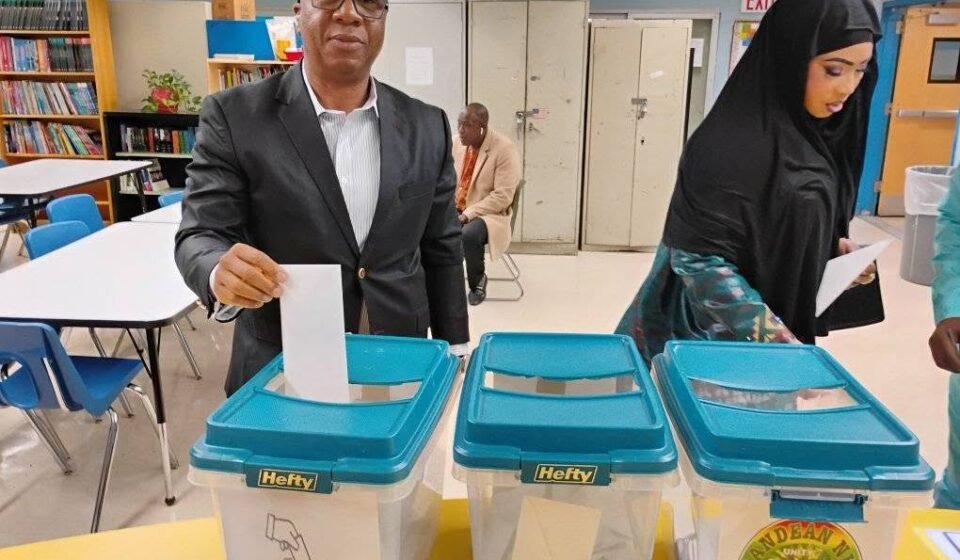
The Bronx’s West African boom is outpacing Parkchester’s ballot box, city data show

Africans now make up 12% of the Bronx’s foreign-born population, more than double their 5% share citywide, according to the city Department of City Planning’s Newest New Yorkers, 2026 report. But in Bronx Community District 9, the Parkchester and Soundview area where many of those residents, including Yoruba, Twi and Igbo speakers, have settled, only 25% of citizens of voting age are naturalized, compared with 28% boroughwide and 32% citywide, per the city Campaign Finance Board’s Bronx Community District 9 Community Profile. The 7-point gap between CD 9 and the citywide rate points to a community whose political voice has not yet caught up with its population growth, with real consequences for representation as New York heads into its next election cycles.
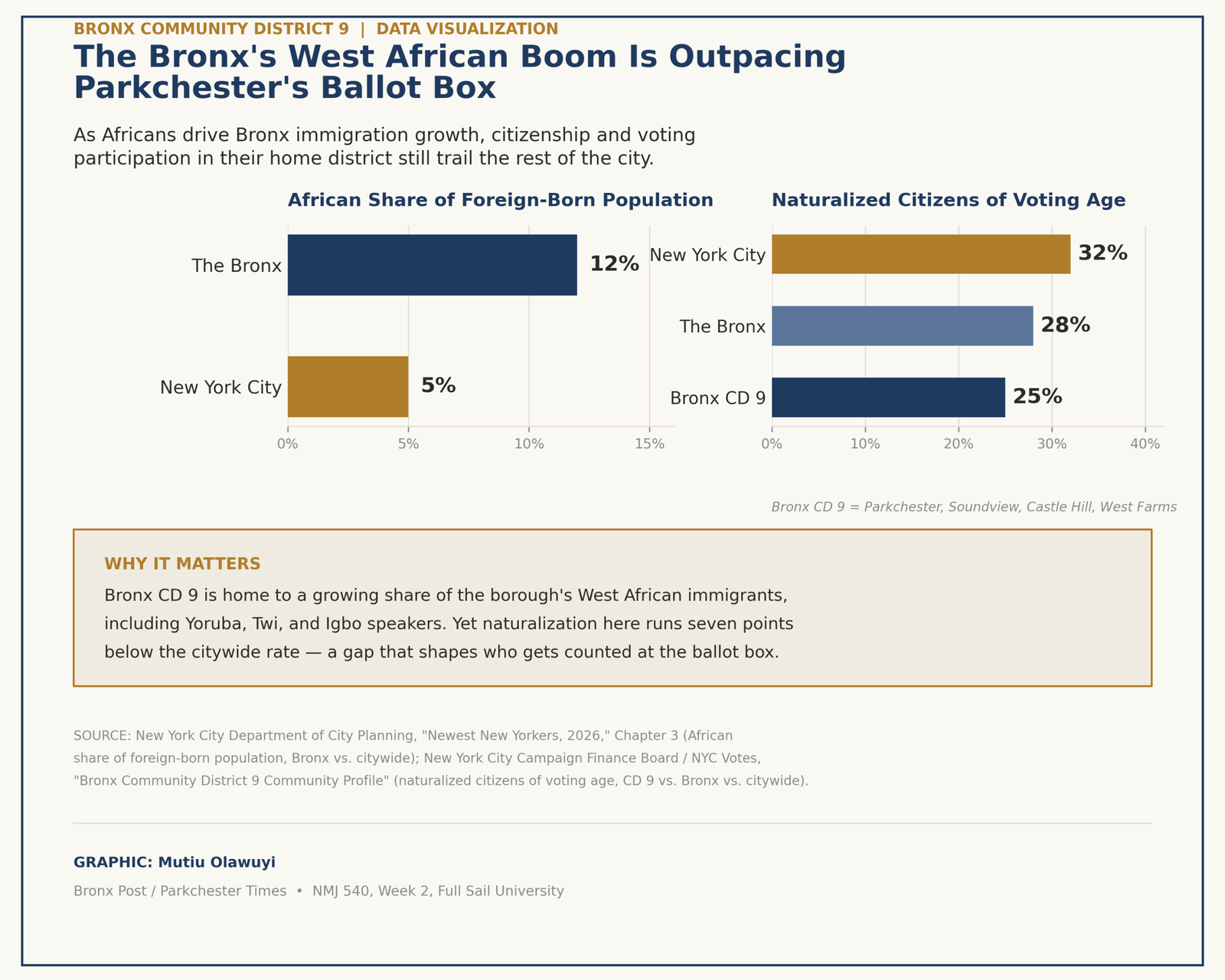
| Geography | African Share of Foreign-Born Pop. | Naturalized Citizens of Voting Age |
| New York City | 5% | 32% |
| The Bronx | 12% | 28% |
| Bronx CD 9 (Parkchester / Soundview) | — | 25% |
Sources: NYC Department of City Planning, Newest New Yorkers, 2026, Chapter 3; NYC Campaign Finance Board / NYC Votes, Bronx Community District 9 Community Profile.
AUTHOR’S NOTE
The African-share figure comes from Chapter 3 of the city Department of City Planning’s Newest New Yorkers, 2026 report, the same record I cited in my Week 1 discussion post. The naturalization figures come from the city Campaign Finance Board’s Bronx Community District 9 Community Profile, one of the CFB’s NYC Votes district profiles, built from the city’s voter file and U.S. Census Bureau American Community Survey data.
I designed the graphic as a two-panel comparison rather than a single chart because the story has two halves: a fast-growing population and a lagging vote. Separating them side by side lets each stand on its own before the callout box ties them together, and it lets a reader absorb the point in the time it takes to glance at a phone screen.
Tool note: I built the chart in Python with Matplotlib rather than inside Datawrapper or Knight Lab directly, styling it to match Datawrapper’s standard chart anatomy (kicker, headline, dek, sourced footer, byline) so it can be dropped into a Datawrapper or Knight Lab template in a few minutes if an interactive, embeddable version is needed for the website. The exact dataset is reproduced below for that purpose.
Photo credit: Mory Kouyate